


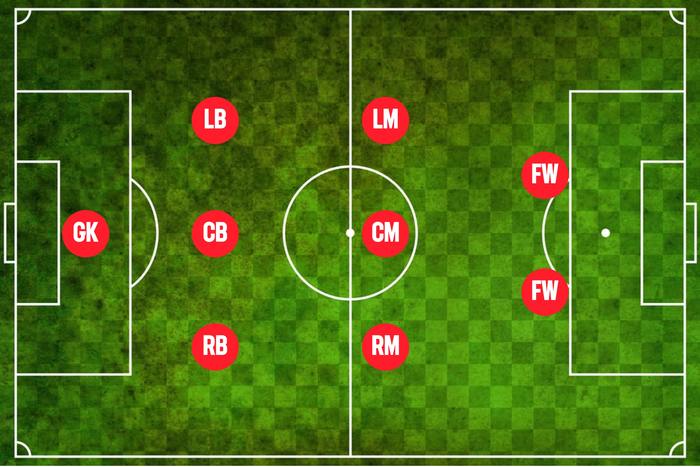
Football team formations are the tactical backbone of every football match. Long before the referee blows the whistle, coaches carefully decide how their players will be positioned on the field to control the game.
A formation determines how many defenders, midfielders, and attackers a team uses during a match. It also defines how players move together, defend spaces, and create goal-scoring opportunities.
When fans watch professional matches in competitions like the Premier League or the UEFA Champions League, they are often witnessing the result of countless tactical decisions made by coaches.
Understanding football team formations helps fans appreciate the strategic depth that exists beyond goals and highlights.
The Evolution of football team formations in Modern Football
Football tactics have evolved dramatically over the past century. Early teams used extremely attacking formations with several forwards and very few defenders.
As the sport became more competitive, coaches realized the importance of balance between attack and defense.
This led to the development of structured football team formations that allowed teams to maintain control in all areas of the field.
During the mid-20th century, many teams adopted formations that emphasized midfield dominance.
This shift helped teams control possession and dictate the tempo of the match.
Today’s tactical systems continue to evolve as coaches experiment with new ideas and strategies.
The Classic 4-4-2 Formation
One of the most famous formations in football history is the 4-4-2 system.
This setup includes four defenders, four midfielders, and two forwards.
For many years, it was considered the most balanced of all football team formations.
The strength of the 4-4-2 formation lies in its simplicity and organization.
Defenders focus on protecting the goal, midfielders support both attack and defense, and strikers concentrate on scoring.
Many legendary managers used this system successfully.
Coaches like Sir Alex Ferguson famously relied on variations of this formation during their managerial careers.
Its structure allows teams to maintain discipline while still creating attacking opportunities.
The Modern 4-3-3 Attacking System
In recent decades, the 4-3-3 formation has become one of the most popular systems in professional football.
This setup includes four defenders, three midfielders, and three attacking players.
The formation allows teams to dominate possession while maintaining attacking width.
Among modern football team formations, the 4-3-3 system is often associated with high pressing and quick attacking movements.
Coaches use this formation to stretch the opponent’s defense and create space for creative players.
Teams coached by managers like Pep Guardiola frequently rely on this tactical structure.
Their focus on passing accuracy and positional play has made the 4-3-3 formation extremely influential in modern football.
This approach emphasizes teamwork, movement, and technical skill.
Defensive Strength in the 5-3-2 Formation
While some formations prioritize attacking play, others focus on defensive stability.
The 5-3-2 system is designed to provide strong defensive coverage while still allowing counterattacking opportunities.
In this structure, five defenders protect the back line, supported by three midfielders and two strikers.
Among different football team formations, the 5-3-2 is particularly effective against teams with strong attacking players.
The additional defender helps cover wide areas and prevent dangerous crosses into the penalty box.
Teams that prefer disciplined defensive play often adopt this formation in important matches.
Although it may appear defensive, the system can quickly transform into an attacking shape during counterattacks.
Tactical Flexibility and Player Roles
One reason formations are so important in football is that they define the responsibilities of each player on the field.
Defenders must coordinate their movements to block attacking runs.
Midfielders control possession and connect defense with attack.
Forwards focus on finishing chances and pressuring the opponent’s defense.
Different football team formations require players to adapt their roles depending on the team’s strategy.
For example, a midfielder in a defensive formation might focus on tackling and ball recovery.
In an attacking system, the same player may be responsible for creating goal-scoring opportunities.
This flexibility highlights the tactical intelligence required in professional football.
How Coaches Analyze Opponents
Choosing the right formation is rarely a random decision.
Coaches study their opponents carefully before selecting a tactical approach.
They analyze previous matches to identify weaknesses in the opposing team’s structure.
This analysis often influences which football team formations a coach decides to use.
For example, a team facing an opponent with strong wingers may use a formation that provides additional defensive coverage on the sides.
Similarly, teams that dominate possession might choose formations designed to control the midfield.
Strategic planning allows teams to adapt to different opponents and situations.
This preparation often determines the outcome of closely contested matches.
Famous Teams Known for Tactical Innovation
Throughout football history, several teams have become famous for their tactical creativity.
One example is FC Barcelona, which became known for its possession-based playing style.
Their success demonstrated how carefully designed football team formations could influence an entire generation of football tactics.
By emphasizing passing accuracy and positional awareness, the team developed a system that dominated opponents.
Many other clubs later adopted similar approaches in their own tactical systems.
This influence shows how successful formations can shape the future of football strategy.
Youth Development and Tactical Education
Young players learning football today are often introduced to tactical concepts at an early stage.
Coaches in youth academies teach players how different formations work and why positioning matters.
Learning about football team formations helps young athletes understand the importance of teamwork.
Players must learn how to move together as a unit rather than focusing only on individual skills.
This tactical education prepares young players for the demands of professional football.
Academies around the world now emphasize both technical ability and strategic awareness.
This balanced approach helps develop smarter, more adaptable players.
The Influence of Data and Analytics
Technology has changed the way coaches analyze football tactics.
Advanced data tools allow teams to study player movements, passing patterns, and defensive positioning.
These insights help coaches evaluate the effectiveness of different football team formations during matches.
By analyzing performance data, teams can adjust their tactics in real time.
For example, if a formation leaves too much space in midfield, coaches may change their structure during halftime.
Analytics has become an essential part of modern football preparation.
Clubs at every level now use data to refine their strategies and improve performance.
The Future of Tactical Innovation
Football tactics continue to evolve as coaches experiment with new ideas.
Some modern systems involve fluid formations where players frequently change positions during the match.
This dynamic style challenges traditional interpretations of football team formations.
Instead of remaining fixed in one structure, teams may shift between attacking and defensive shapes depending on the situation.
These tactical innovations reflect the creativity and intelligence of modern coaches.
As football continues to develop, new formations and strategies will likely emerge.
Fans and analysts will continue to study these systems to understand how teams achieve success on the field.
Read also:
mohun bagan super giant vs roundglass punjab fc timeline
washington commanders vs tampa bay buccaneers match player stats
tampa bay buccaneers vs washington commanders match player stats
milwaukee bucks vs dallas mavericks match player stats