
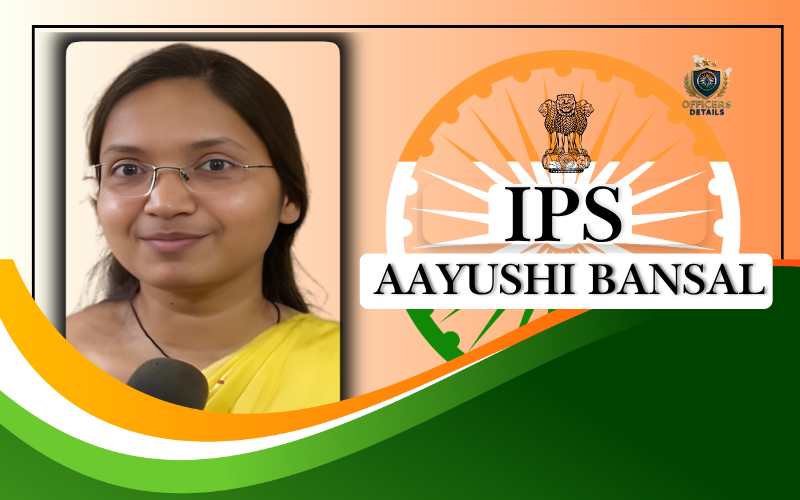
Many UPSC aspirants spend countless hours reading current affairs, government reports, and constitutional topics without paying enough attention to the officers who actually implement policies on the ground. That part matters too. Learning about serving IAS officers helps students understand how administration works beyond textbooks. It also creates a better picture of governance, leadership, and decision-making in real situations. This is exactly where IAS Corner becomes useful because it connects preparation with practical administrative examples instead of only focusing on theoretical concepts.
Why Officer Profiles Matter
Reading biographies of IAS officers is not about memorizing names before an examination. The real value comes from understanding how different officers reached the civil services despite having completely different educational backgrounds. Some studied engineering while others completed degrees in medicine, humanities, commerce, agriculture, or law. Their journeys remind aspirants that success depends much more on discipline than on academic specialization.
Career histories also reveal how officers gradually receive responsibilities across departments. A young officer may begin as a Sub-Divisional Magistrate before taking charge as District Magistrate. Later assignments could include urban development, education, finance, health, industries, disaster management, or secretariat positions. Every posting develops a different administrative skill, making their professional journey worth studying.
Many candidates become discouraged after one unsuccessful attempt. Looking at real officer biographies often changes that mindset because numerous successful IAS officers cleared the examination after multiple attempts. Their stories prove persistence usually matters far more than immediate success.
Understanding Administrative Careers
An IAS career rarely follows a predictable route. Every state cadre offers different experiences, priorities, and administrative challenges. Officers serving in coastal districts may spend years managing cyclone preparedness, while officers working in drought-prone regions focus heavily on water conservation and agricultural support.
Urban districts require attention toward traffic management, waste disposal, digital governance, and infrastructure planning. Tribal districts demand different administrative approaches involving healthcare access, education improvement, and preservation of local communities. This diversity explains why studying officer careers provides practical administrative knowledge instead of only theoretical understanding.
Career progression generally depends upon experience, performance, departmental requirements, and government decisions. Officers gradually move from district administration into policy-making positions at the state or central government level. Every stage introduces fresh responsibilities requiring continuous learning.
Education And Preparation
One common misunderstanding among beginners is believing that only toppers from prestigious institutions become IAS officers. Reality presents a much broader picture. Every year candidates from ordinary colleges, rural universities, and smaller towns successfully qualify for the Civil Services Examination.
Their biographies often reveal simple preparation habits rather than extraordinary intelligence. Most successful officers consistently revised NCERT books, standard reference materials, newspapers, and previous year question papers. They emphasized answer writing, optional subject preparation, and mock interviews without constantly changing strategies.
Time management appears repeatedly across officer interviews. Instead of studying endlessly every single day, many successful candidates maintained realistic schedules that balanced preparation with proper sleep and physical health. Long-term consistency usually produced better outcomes than short periods of excessive study.
Leadership Beyond Offices
An IAS officer’s responsibility extends far beyond signing official files. Administrative leadership frequently requires immediate decisions during floods, pandemics, elections, law and order situations, and natural disasters. Such situations rarely provide unlimited time for analysis.
Biographies frequently describe officers coordinating with police departments, health officials, engineers, teachers, local representatives, and community organizations simultaneously. Communication therefore becomes just as valuable as technical knowledge.
Many officers are also recognized for introducing innovative governance models. Digital grievance systems, transparent recruitment processes, water conservation campaigns, school modernization projects, and technology-based public service delivery have emerged because officers experimented with practical solutions suited to local conditions.
Innovation usually begins with understanding local problems instead of copying ideas from elsewhere. That practical approach explains why administrative biographies remain valuable reading material.
Challenges During Service
Public administration involves continuous challenges that remain largely invisible to ordinary citizens. Officers often work under political expectations, legal limitations, financial constraints, environmental concerns, and public pressure simultaneously.
Decision-making becomes especially difficult because every administrative action affects thousands or sometimes millions of people. Delays may attract criticism while quick decisions may also face legal scrutiny. Maintaining neutrality under such circumstances requires emotional stability alongside professional competence.
Transfers represent another common aspect of administrative careers. Officers frequently relocate between districts, departments, and government roles depending upon administrative requirements. Every transfer demands fresh understanding of local geography, culture, economics, and public expectations.
Despite these challenges, many officers continue implementing reforms that significantly improve governance at the grassroots level.
Technology In Administration
Modern administration increasingly depends upon digital governance. Government departments now utilize online service delivery, electronic records, digital land management systems, biometric attendance, public grievance portals, and real-time monitoring dashboards.
Several IAS officers actively promote technological reforms because digital systems reduce delays while improving transparency. Citizens can access certificates, licenses, welfare schemes, and application tracking through online platforms without repeatedly visiting government offices.
Artificial intelligence, geographic information systems, drone surveys, and data analytics are gradually becoming important administrative tools as well. Officers capable of understanding technological developments often implement more efficient governance systems compared with traditional manual processes.
Technology alone never solves governance problems completely. Human judgment, ethical decision-making, and community participation remain equally essential.
Public Welfare Focus
Administrative success cannot be measured only through infrastructure projects or budget utilization. Public welfare remains the central objective behind every government initiative.
Officer biographies frequently mention improvements in healthcare services, education quality, women’s empowerment, rural development, employment generation, sanitation, drinking water availability, and nutrition programs. These achievements usually require coordination among multiple government departments instead of isolated efforts.
Listening to citizens also becomes an important administrative responsibility. Public meetings, grievance camps, inspections, and field visits help officers understand practical difficulties that official reports sometimes fail to capture.
Many respected administrators developed reputations because they regularly interacted with local communities instead of remaining confined to office buildings.
Ethics And Responsibility
Ethics forms the backbone of civil services. Every administrative decision should remain consistent with constitutional values, legal provisions, and public interest. Officer biographies often highlight situations where integrity influenced difficult decisions involving public resources or administrative fairness.
Transparency improves public confidence. Honest communication, documented procedures, and objective evaluation reduce unnecessary disputes while strengthening institutional credibility.
Professional responsibility also includes continuous learning. Government policies, technologies, legal frameworks, and public expectations evolve regularly. Officers therefore update their knowledge throughout their careers instead of relying only upon earlier training.
This commitment toward lifelong learning explains why experienced administrators continue attending workshops, policy discussions, and specialized training programs even after decades of service.
Lessons For Aspirants
Aspirants sometimes search endlessly for secret preparation techniques although officer biographies reveal remarkably ordinary habits. Daily consistency, disciplined revision, balanced newspaper reading, answer writing practice, and emotional resilience appear repeatedly across successful journeys.
Comparison with other candidates usually creates unnecessary pressure. Every officer prepared under different personal circumstances involving financial limitations, family responsibilities, educational backgrounds, and language preferences. Success therefore cannot follow one universal formula.
Studying biographies also improves interview preparation because candidates gain practical administrative understanding rather than theoretical definitions alone. Real examples strengthen analytical thinking during personality tests.
Reading about serving officers should inspire disciplined preparation instead of unrealistic expectations.
Staying Updated Regularly
Administrative appointments, transfers, awards, policy initiatives, and significant achievements continue throughout the year. Reliable information therefore becomes important for students, researchers, journalists, and citizens interested in Indian governance.
Verified government notifications remain the most dependable source for appointment updates. Official departmental announcements provide greater accuracy than unverified social media discussions or misleading online claims.
Regular reading also helps aspirants connect current affairs with administrative structures. Instead of viewing news as isolated events, they begin understanding how governance decisions influence society through administrative implementation.
That broader perspective ultimately strengthens both examination preparation and general awareness regarding India’s public administration system.
Conclusion
Learning about serving IAS officers provides much more than inspirational stories because it builds practical understanding of governance, leadership, ethics, and administrative responsibility. officersdetails.com regularly helps readers explore verified biographies, career journeys, administrative roles, and professional achievements through well-organized information that supports meaningful learning. Instead of focusing only on examination preparation, readers should also understand how public administration functions across districts, states, and national institutions. Continue following authentic officer profiles, stay updated with administrative developments, and use that knowledge to strengthen both your UPSC preparation and your understanding of India’s evolving governance system through IAS Corner.
Read also:-